RAG Chunking for AI Chatbots: How to Split Content Effectively
Good RAG chunking makes website knowledge discoverable without breaking key context. This guide shows how teams plan sections, overlap, metadata, and retrieval testing in practice.

Category archive
Practical setup advice for adding, training, and improving a website AI chatbot without harming UX or site performance.

Good RAG chunking makes website knowledge discoverable without breaking key context. This guide shows how teams plan sections, overlap, metadata, and retrieval testing in practice.

Fast chatbot responses are built across the entire technical pipeline. Here is how to plan latency budgets, streaming, timeouts, retries, and secure fallbacks.

How a website chatbot connects catalog, prices, inventory, and variants with clear freshness rules—and responds gracefully when data is outdated.

Citations make chatbot answers reliable only when statements, source passages, and links align. Here is how to build references, link validation, uncertainty handling, and fallbacks into your website chatbot.

How website chatbots securely continue conversations after navigation, return visits, or switching devices – with clear identity boundaries, expiration rules, and Human Handoff.

A file upload in a website chatbot requires more than a paperclip icon. This guide connects clear boundaries, technical validation, understandable status messages, and secure handoff.

How website chatbots schedule appointments reliably: check live availability, handle time zones correctly, prevent double bookings, and securely confirm results.

How an AI chatbot supports complex website forms with clear field help, actionable error handling, accessibility, and smooth human handoff.

A public website chatbot and an authenticated AI chatbot in a customer portal require distinct data, tool, and security boundaries. This guide presents a practical architecture including a test matrix.

A reliable AI chatbot needs more than up-to-date documents. It requires clear content ownership, tiered approvals, and a controlled path from change request to verified answer.

How website, support, and product teams prepare AI chatbots for outages: using health signals, degraded mode, rollback, escalation, and postmortems.

How to migrate an AI chatbot in a controlled manner during a website relaunch: separate staging, map URLs, re-index the knowledge base, and verify responses.

How to test AI chatbot routing with target paths, false positives and negatives, handoff funnels, locale comparisons, and targeted review samples.

A multilingual website needs more than translated FAQ pages. This guide shows how teams verify sources, crawling, retrieval, and review per locale to ensure an AI chatbot provides consistent and verifiable answers in all languages.

A website chatbot only becomes reliable when its answers are regularly checked against sources, expected answers, and real user questions. This guide shows how teams build a Golden Set, RAG tests, and a lean review workflow.

An AI chatbot knowledge base remains reliable only if sources are approved, changes are crawled promptly, and answers are regularly verified against the original content.

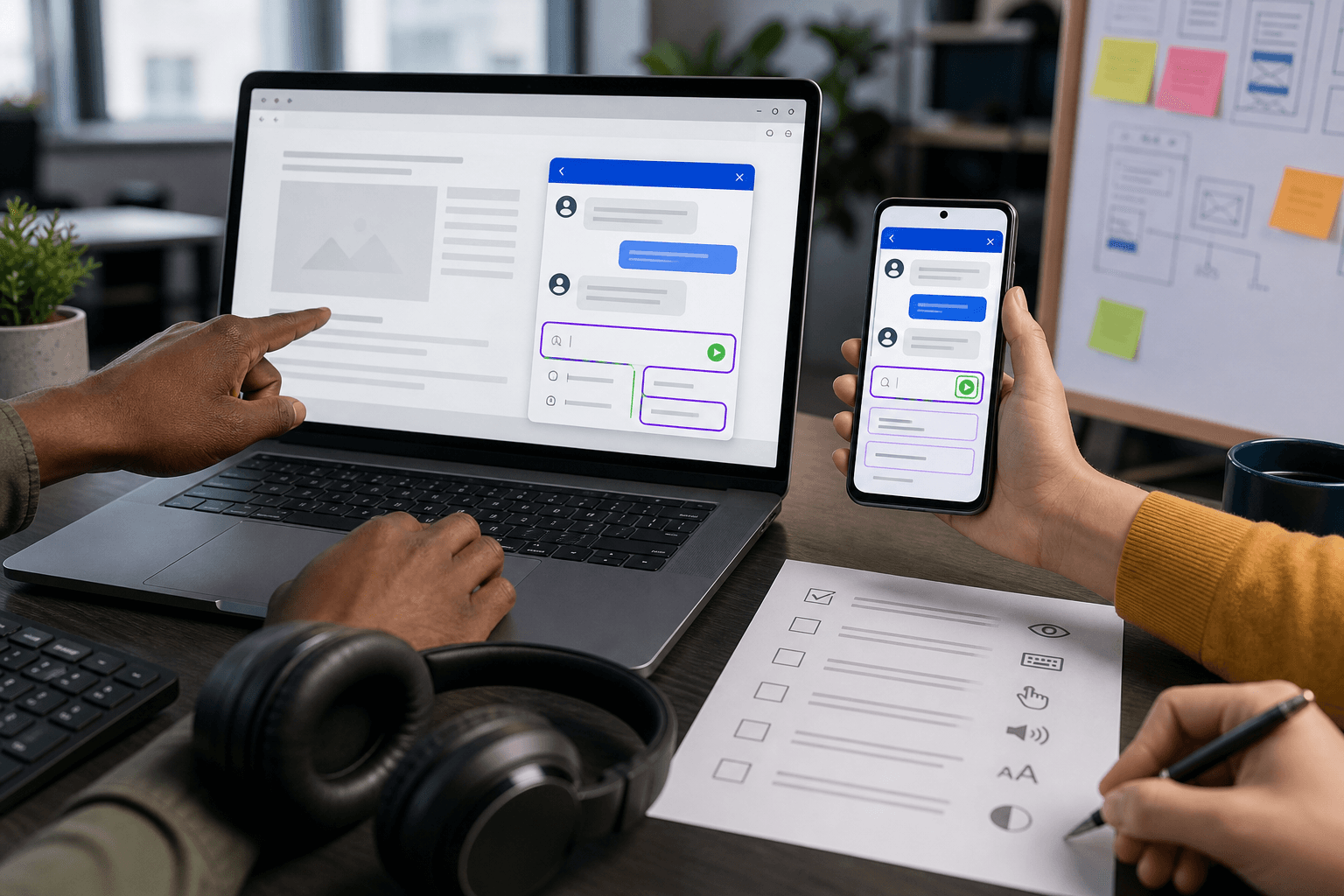
An AI chatbot is only helpful if everyone can use it. This WCAG-oriented checklist shows what website teams should consider regarding widgets, dialogs, keyboard navigation, mobile usage, and support handovers.
How to think about language coverage, localized knowledge, and translation quality when your website serves customers across multiple markets.
What website teams should prepare before launch so the chatbot stays accurate, helpful, and aligned with approved business information.
A rollout blueprint for adding a chatbot to your website while keeping the user journey, page speed, and content structure in good shape.