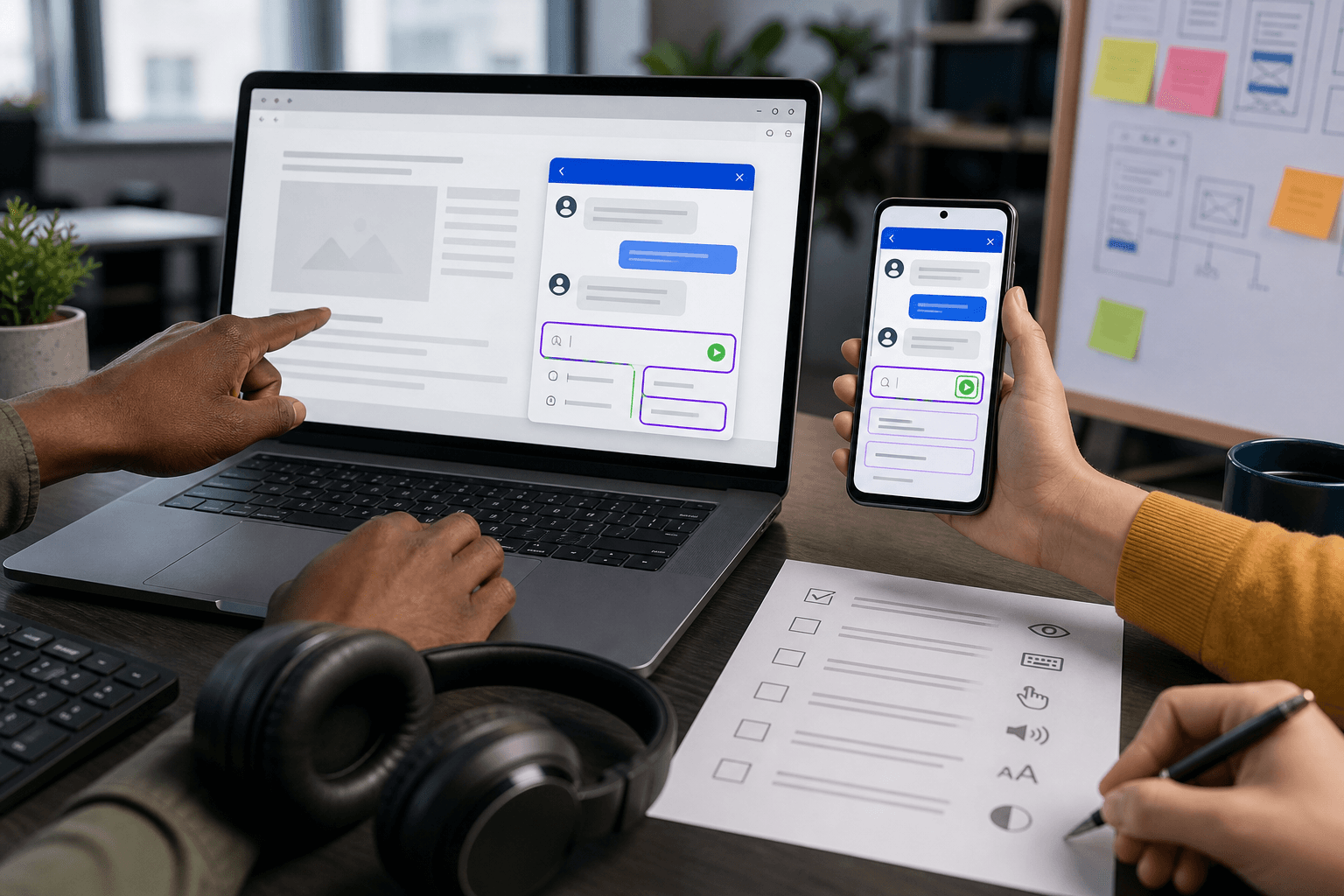
AI Chatbot for Website Forms: Field Help, Error Handling, and Safe Handoff
How an AI chatbot supports complex website forms with clear field help, actionable error handling, accessibility, and smooth human handoff.
Actionable guides, industry playbooks, and practical explanations for businesses that want to use an AI chatbot on their website without sacrificing trust, compliance, or conversions.
Featured article

How an AI chatbot supports complex website forms with clear field help, actionable error handling, accessibility, and smooth human handoff.
Latest articles

Use this practical audit to check chatbot disclosure, timing, accessibility, ownership, synthetic content, evidence, and rollout controls before Article 50 applies.

Design an AI chatbot for order status, returns, and warranty questions without exposing customer data, overpromising outcomes, or trapping people in automation.

A reliable chatbot handoff is more than a transfer button. Learn how to package context, route the case, set queue expectations, protect data, and test the complete transition.

A public website chatbot and an authenticated AI chatbot in a customer portal require distinct data, tool, and security boundaries. This guide presents a practical architecture including a test matrix.

Unanswered and uncertain chatbot queries are more than isolated errors: they reveal missing knowledge, sources, or responsibilities. A structured workflow turns them into a prioritized content backlog with regression testing.

A reliable AI chatbot needs more than up-to-date documents. It requires clear content ownership, tiered approvals, and a controlled path from change request to verified answer.

How website, support, and product teams prepare AI chatbots for outages: using health signals, degraded mode, rollback, escalation, and postmortems.

How to migrate an AI chatbot in a controlled manner during a website relaunch: separate staging, map URLs, re-index the knowledge base, and verify responses.

How to measure chatbot quality using minimal events, controlled conversation sampling, separated data tiers, and transparent retention periods.

How website teams mitigate direct and indirect prompt injection using segregated trust zones, least privilege, output validation, and targeted security testing.

How to test AI chatbot routing with target paths, false positives and negatives, handoff funnels, locale comparisons, and targeted review samples.

How to plan multilingual lead qualification in an AI chatbot: necessary questions, clear handoffs, locale QA, and data protection without unnecessary data collection.

A multilingual website needs more than translated FAQ pages. This guide shows how teams verify sources, crawling, retrieval, and review per locale to ensure an AI chatbot provides consistent and verifiable answers in all languages.

A website chatbot only becomes reliable when its answers are regularly checked against sources, expected answers, and real user questions. This guide shows how teams build a Golden Set, RAG tests, and a lean review workflow.

An AI chatbot knowledge base remains reliable only if sources are approved, changes are crawled promptly, and answers are regularly verified against the original content.

An AI chatbot only provides sustainable relief for support teams if it masters the transition to a human. This checklist shows triggers, context data, handover texts, and KPIs for better website support.

An AI chatbot is only helpful if everyone can use it. This WCAG-oriented checklist shows what website teams should consider regarding widgets, dialogs, keyboard navigation, mobile usage, and support handovers.

New transparency obligations for AI chatbots apply from August 2, 2026. This checklist shows website operators which notices, processes, and evidence are now important.
How a well-configured AI chatbot helps website visitors get answers faster, qualify themselves, and become better leads without adding manual support work.
A plain-English explanation of what a chatbot is, the main types, how modern AI chatbots work, and where they actually help on business websites.
A clear look at how SEO and on-site AI chat support each other, where expectations go wrong, and how to build a workflow that uses both well.
Where chat can help with room questions, policy clarifications, local information, and booking intent without replacing real hospitality.

How property businesses can use chat to handle listing questions, viewing requests, financing basics, and early-stage lead qualification.

How service-led companies can qualify leads faster, answer common questions better, and route serious inquiries to the right human at the right moment.
What agencies need from a website chatbot setup when they manage multiple brands, multiple content sources, and multiple client stakeholders.
How SaaS teams can use chat to support product education, demo qualification, pricing questions, onboarding, and self-serve expansion.
A practical view of how website owners can add AI chat to WordPress without turning their content stack into a fragile plugin maze.
Where AI chat helps online stores handle product questions, shipping concerns, returns, and pre-purchase hesitation without bloating the support queue.
A practical KPI set for understanding whether your chatbot is just active or actually moving support quality, pipeline quality, and revenue impact.
A field guide to the most frequent chatbot rollout mistakes, from weak content preparation to poor placement, over-automation, and false expectations.
How to think about language coverage, localized knowledge, and translation quality when your website serves customers across multiple markets.
What website teams should prepare before launch so the chatbot stays accurate, helpful, and aligned with approved business information.
A practical checklist for teams that want to use an AI chatbot on their website without ignoring privacy, data minimization, and operational risk.
A rollout blueprint for adding a chatbot to your website while keeping the user journey, page speed, and content structure in good shape.
Where chat-driven lead capture actually works, which buying signals matter, and how to qualify website visitors without annoying them.
How an AI chatbot reduces repetitive tickets, shortens response times, and still leaves room for human support where it matters most.
A realistic look at where website AI chatbot costs actually come from, from implementation and governance to content upkeep and support handoffs.
A clear comparison of three common website communication tools and how to decide which one should handle which visitor intent.
Ten concrete website signals that show whether an AI chatbot is a nice-to-have experiment or an urgent operational upgrade.
A practical explanation of what a website AI chatbot is, how it works, and where it fits between static FAQs, forms, and live chat.